Fire, Sewage And Mold Each Demand Their Own Cleanup Rules
Not every restoration job starts the same way, because the source of the damage decides what is inside the walls, the carpet, and the air. A failed supply line leaves mostly clean water to manage. A sewer backup, a kitchen fire, or an unattended death leaves contamination that drying alone will not fix. Crews sort each loss by cause first, then match containment, protective equipment, and disposal to it.
That sorting also sets the clock. Water-damaged materials generally need to be dry within 24 to 48 hours to prevent mold growth, according to the EPA’s brief guide to mold and moisture. Contaminated losses add a second constraint, since porous materials that absorbed sewage or biological fluids usually cannot be saved. The sections below take each loss type in turn.
Many losses involve more than water, and American Restoration Professionals covers that range with sewage cleanup, biohazard cleanup, fire damage removal, and mold removal alongside water damage restoration for properties in Quincy, Massachusetts and across the South Shore. The company is IICRC certified, a Lead-Safe EPA certified firm, and open 24 hours Monday through Saturday. Property owners who cannot tell which category a loss falls into can call (617) 945-4510 to schedule an assessment before any materials are removed.
Clean Water Losses
Supply line failures, appliance leaks, and roof intrusions begin as the lowest-risk category of water. That changes if the water sits and picks up debris or bacteria.
- Main hazards: saturated drywall and insulation, energized outlets near wet areas, moisture trapped in wall cavities, and mold if drying runs past the 48-hour mark.
- Protective gear: gloves, boots, and eye protection, with respirators added once growth is visible.
- Cleanup protocol: extract standing water, map moisture with meters and thermal imaging, run air movers and dehumidifiers, and log readings until materials reach a dry standard. Anything that cannot dry, such as soaked carpet pad, comes out.
Sewage And Floodwater
Sewage is classed as black water, and floodwater is generally presumed to carry it. The CDC’s guidance on cleaning safely after a disaster calls for discarding drywall and insulation that sewage or floodwater has touched, and for boots, goggles, and gloves during the work.
- Main hazards: bacteria, viruses, and parasites in raw sewage, sharp debris hidden under murky water, and cross-contamination when foot traffic carries residue into clean rooms.
- Protective gear: rubber boots, goggles, waterproof gloves, and coveralls, with cuts and wounds covered. A face shield or respirator is added when splashing is likely.
- Cleanup protocol: restrict access, pump out contaminated water, remove carpet, pad, drywall, and insulation that absorbed it, clean hard surfaces before disinfecting them, and launder worn clothing in hot water.
Fire And Smoke
A fire loss is usually a mixed loss, because suppression water arrives with the soot.
- Main hazards: fine soot particles, acidic residue that etches metal and glass, odor embedded in porous materials, weakened structure, and water from firefighting.
- Protective gear: respirators, disposable coveralls, gloves, and eye protection. Older buildings may release lead paint or asbestos-containing material when charred finishes are disturbed, so testing comes before demolition.
- Cleanup protocol: secure openings, extract suppression water, remove loose soot with HEPA vacuums and dry sponges before any wet cleaning (which can smear it), then clean surfaces, deodorize, and remove charred materials.
Mold
Mold is rarely the original loss. It is what remains when a water loss stayed wet too long, which is why the moisture source gets fixed first.
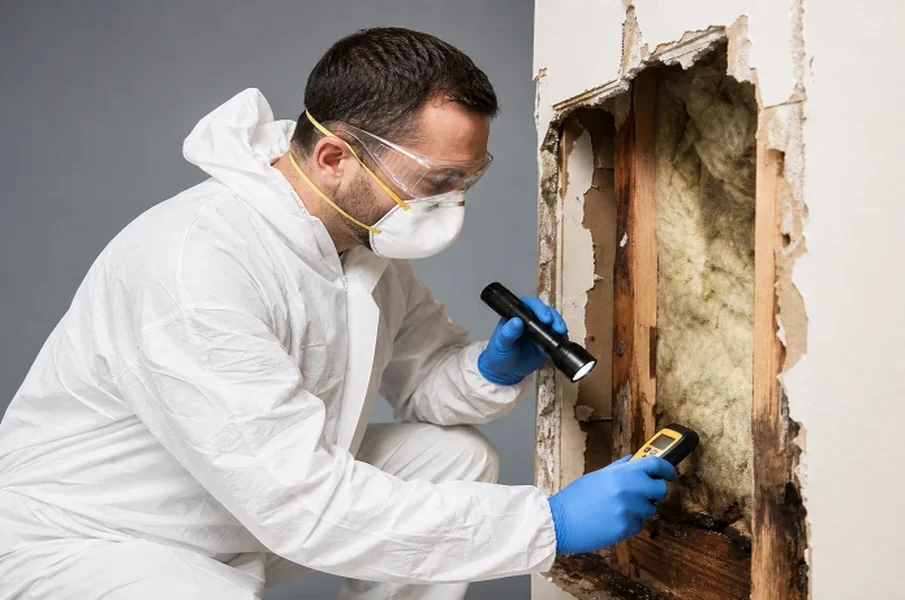
- Main hazards: airborne spores that spread when growth is brushed or sanded, allergic and respiratory irritation, hidden growth behind wallboard, and regrowth if moisture persists.
- Protective gear: an N95 respirator or better, goggles, gloves, and disposable coveralls.
- Cleanup protocol: correct the moisture problem, contain the area with plastic sheeting and negative air, remove porous materials with growth, scrub hard surfaces with detergent and water, dry them completely, and clean up with HEPA filtration.
Biohazard
Blood and other bodily fluids fall under federal worker-protection rules. OSHA’s bloodborne pathogens standard rests on universal precautions, which treat all human blood and certain body fluids as if known to be infectious. OSHA has also confirmed that the standard covers contractors who clean up blood after accidents, and that the resulting waste counts as regulated waste.
- Main hazards: bloodborne pathogens such as hepatitis B and HIV, contaminated sharps, and mattresses, flooring, or furniture that absorbed fluids.
- Protective gear: disposable coveralls, double gloves, eye and face protection, shoe covers, and respirators as needed, removed in sequence and bagged as waste.
- Cleanup protocol: remove gross material, package regulated waste in labeled containers, discard saturated porous items, apply disinfectant for its full labeled contact time, and release waste to licensed transport.
Loss Types Side By Side
| Loss type | Main hazard | How crews handle it |
|---|---|---|
| Clean water | Hidden moisture and mold after 48 hours | Extraction, moisture mapping, controlled drying, removal of items that cannot dry |
| Sewage and floodwater | Bacteria, viruses, and parasites | Full barrier gear, removal of porous materials, cleaning before disinfection |
| Fire and smoke | Soot, acidic residue, odor, lead or asbestos in older finishes | Dry soot removal first, HEPA vacuuming, deodorizing, hazardous material testing |
| Mold | Airborne spores and regrowth | Fix moisture, containment with negative air, removal of affected porous materials |
| Biohazard | Bloodborne pathogens | Universal precautions, regulated waste packaging, labeled disinfectant contact time |
Matching the response to the source keeps a contained problem from becoming a building-wide one. A crew that treats sewage like clean water leaves pathogens in the drywall, and one that wet-cleans soot too early drives it deeper into the surface. Identifying the category on day one protects both the structure and the people working in it.