Nasal Polyps Treatment: Why the Nose Blockage Keeps Coming Back
You can breathe through one nostril today and feel like you are underwater by Friday. Your coffee tastes like nothing. Your voice on a conference call sounds like you are talking through a towel. You take a decongestant, it helps for two days, and then the wall goes right back up.
That pattern, on again and off again, is the signature move of nasal polyps. They are soft, painless growths inside the nasal passages and sinuses, and they are not a lump you can see. They quietly swell, block airflow, and mute your sense of smell. Millions of people spend years cycling through sprays and pills without ever getting the right answer, which is where nasal polyps treatment starts to matter. The fix is rarely one product. It is a plan.
Below, you will get the anatomy in plain words, the signs that point to polyps over a common cold, and the treatment ladder that ear, nose, and throat specialists actually follow. You will also see why so many home remedies stall out, and the one question worth asking before you buy another spray.
What nasal polyps actually are
Polyps are teardrop-shaped growths of inflamed tissue. They form where the mucous membrane lining your nose and sinuses has been irritated for a long stretch, and they tend to cluster in the middle of the nasal cavity and the spaces around the cheekbones.
Here is the part that surprises people: polyps themselves do not hurt. They cause traffic problems. Air cannot pass, mucus cannot drain, and your smell receptors get cut off from the airflow they need to work. That is why the same growth can cause a blocked nose, postnasal drip, facial pressure, and a total loss of taste at the same time.
Nobody knows exactly why some people grow them and others do not, though the pattern is well established. Allergic and inflammatory conditions raise the risk, and asthma shows up alongside polyps often enough that specialists check for it. According to the National Institutes of Health, polyps are tied to chronic inflammation of the nasal lining rather than infection, which is the single most useful fact for understanding why antibiotics and cold medicine never clear them.
Signs it is polyps and not a cold
A cold lasts a week or so. Polyps are patient. They hang around for months and get slowly worse.
Watch for a nose that stays blocked on both sides, a dull sense of smell that you first notice when food stops tasting like anything, a runny nose that runs down the back of your throat, and a nagging pressure behind your eyes or in your upper jaw. Snoring gets louder. Mouth breathing at night becomes normal, and you wake up with a dry throat and no idea why.
One-sided symptoms are a different story. If the blockage lives in one nostril and never moves, that needs a proper exam rather than a wait-and-see approach. Diagnosis is usually quick: a specialist looks inside the nose with a thin scope, and imaging may be used if the sinuses need a closer look.
The treatment ladder, from mild to surgical
Most people start at the bottom and work up. Here is how that climb usually goes.
Step 1: control the inflammation
Prescription corticosteroid nasal sprays are the backbone of nonsurgical care. They shrink polyps over weeks, not days, and they are safe for long-term use in a way that over-the-counter decongestant sprays are absolutely not. Those decongestant sprays are the trap. Use one past a few days and your nose rebounds into worse congestion, which feels exactly like polyps getting bigger. It is not. It is the spray.
Step 2: treat what is feeding the growths
If allergies are part of your picture, they are worth treating directly. Testing tells you what is actually setting off the inflammation, and allergy treatment quietly removes one of the fuels that keeps the tissue swollen. Saline rinses are worth the small hassle here. They flush out mucus and allergens, and while they will not shrink a polyp, they make breathing easier and help your medication reach the lining.
Step 3: short courses of oral steroids
A specialist may prescribe a short burst of oral corticosteroids to break a bad flare. It can shrink polyps fast and restore smell within days. It is also not something you do repeatedly on your own, because long-term steroid use carries real risks. This is the point where a plan beats a prescription pad.
Step 4: surgery, when medication is not enough
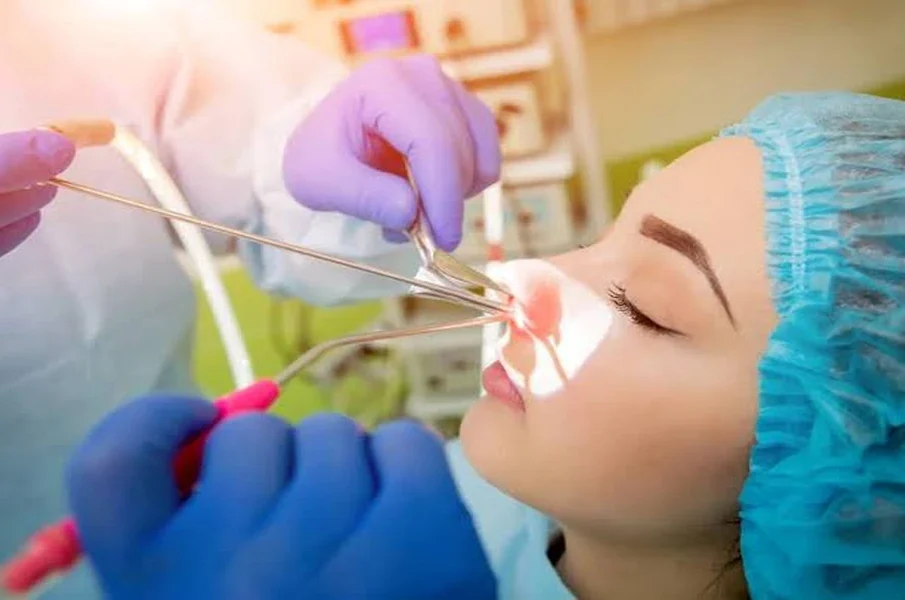
Endoscopic sinus surgery is the option when polyps are large, or when sprays and rinses are not holding the line. It is done through the nostrils with no external cuts and it has a strong track record. I would be blunt with anyone asking me: surgery is not a cure, it is a reset. Polyps can regrow, which is why the after-care sprays matter as much as the operation itself.
Why polyps keep coming back
The regrowth question is the one that frustrates people most, and the honest answer is that the underlying tendency stays with you. The Centers for Disease Control and Prevention notes that chronic sinus conditions often require ongoing management rather than a single fix, and polyps fit that mold.
That means the winner is usually the person who sticks with daily maintenance even after they feel better. Steroid spray, saline rinse, allergy control, and follow-up visits together are what keep the passages open. People who stop the spray the moment they feel fine tend to see the whole cycle restart within months.
A simple plan you can act on this week
If this sounds like your nose, here is a sequence worth following.
- Track symptoms for one week. Note which side is blocked, whether smell has changed, and how sleep is going.
- Stop any over-the-counter decongestant spray immediately. It is very likely making things worse.
- Start a saline rinse once or twice a day with distilled or properly boiled water.
- Book an evaluation if blockage has lasted more than 10 to 12 weeks, or if smell has dropped off.
- Ask about allergy testing if you have not had it done, especially if you also have asthma.
- Do not self-prescribe steroid pills. The dosing and duration matter, and a specialist should set them.
The Mayo Clinic notes that treatment for nasal polyps focuses on shrinking or removing them, which is a fair one-line summary of the ladder above. The follow-up question, and the one that matters more, is what happens in month six and month twelve. That is where consistency, not courage, decides the outcome.
The question to ask before your next appointment
Ask your specialist this: what is the maintenance plan once I feel better? Not what happens if I take a round of pills. Then ask who follows up on it. Good care for polyps is a long game with short visits, and the patients who do best are the ones who treat the spray like a toothbrush and not a fire extinguisher.
Breathing through both nostrils again is not a luxury. It is how you taste dinner, sleep through the night, and stop sounding like a guest on a bad phone line. If that blocked nose has been sticking around for a season and a half, stop guessing and get it looked at.